
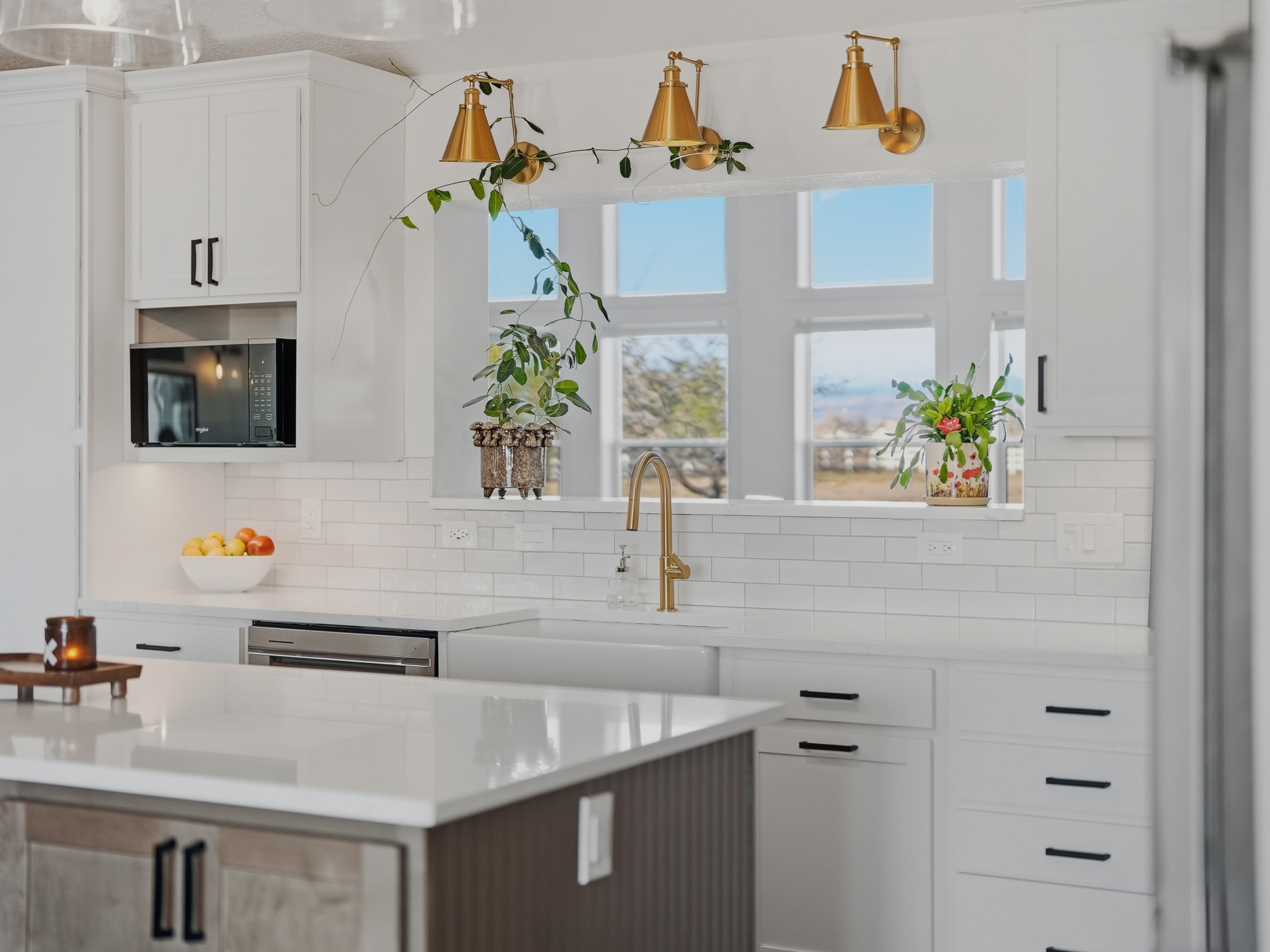
HDR Photography: Why a Pro Still Beats Your iPhone for Real Estate Listings
Real estate photography is about more than taking a pretty picture. It’s about accurately representing a space, communicating scale and light, and creating an emotional response that draws a buyer in. High Dynamic Range (HDR) techniques are a common tool for interiors because they help reconcile bright windows with darker room interiors. While modern iPhones and their computational HDR do an impressive job for casual use, there are distinct technical and creative advantages a professional brings to a listing shoot.
What HDR does — in practical terms
HDR combines multiple exposures so shadow detail and highlights are both visible in a single image. For real estate, that means:
• Windows retain a view or sky tone instead of blowing out to pure white.
• Interior details in deep shadows remain legible and textured instead of becoming black blobs.
• The overall image feels balanced and closer to what the eye perceives in a scene with high contrast.
HDR is a capture-and-post process. The quality of the final result depends on how exposures are taken, how they’re aligned, and the choices made during blending and retouching.
Why hiring a professional still matters
1. Technical control over capture
• Professionals use full-frame or large-sensor cameras that deliver better dynamic range and low-light performance than small-phone sensors. That translates to cleaner shadows and finer highlight detail after HDR blending.
• They bracket deliberately (intentional exposure increments, mirrored to the scene) and use sturdy tripods for perfect alignment when merging multiple frames.
2. Lens choice and perspective control
• Dedicated wide-angle lenses built for real estate yield less distortion and better corner-to-corner sharpness than phone lenses. Tilt‑shift or rectilinear lenses and careful framing preserve verticals and architectural lines, reducing time spent correcting geometry in post.
3. RAW capture and color fidelity
• Professionals shoot RAW files that retain more tonal information and color data than most compressed phone formats. RAW gives post-processing latitude to recover highlight and shadow detail without introducing artifacts.
4. Better handling of motion and ghosting
• Interior shoots often include moving subjects (fans, curtains, people) or mixed light. A pro anticipates these issues, times brackets, and uses masking techniques to avoid ghosting and unnatural composites.
5. Thoughtful post-processing
• HDR is as much about editing as it is about capture. Skilled retouching avoids the overcooked, haloed look sometimes associated with HDR and yields images that feel natural, cinematic, and accurate to the space.
6. Consistency and deliverables
• Agents need consistency across a portfolio of listings. A professional provides a predictable workflow, standardized edits, calibrated colors, and deliverables sized and formatted for MLS, print, and web.
7. View beyond the technical
• Experienced photographers make compositional and lighting choices that tell the property’s story: which angle feels most expansive, where to bring attention, how to stage light to sell the mood of a room.
What iPhone HDR does well — and its limits
Modern iPhones use computational photography to merge exposures and reduce noise. That makes them excellent for quick social posts, pre-listing walkthroughs, or when speed and convenience outweigh perfection. They offer:
• Very fast capture and immediate results.
• Decent automatic HDR for balanced exposures in many everyday scenes.
• ProRAW (on some models) and third-party apps that allow manual bracketing and basic RAW capture.
Limits to be aware of:
• Sensor size and pixel pitch still constrain ultimate image quality, especially in low light and large output formats.
• Phone lenses are small and often introduce more distortion and vignetting than professional glass.
• Computational blending can struggle with complex window views, reflective surfaces, or mixed white-balance lighting.
• Handheld capture increases the risk of misalignment when combining frames; while software can compensate, it’s not infallible.
When an iPhone is appropriate
• Quick social media previews or behind‑the‑scenes stories.
• Fast photo updates when a pro isn’t available and the expectation is informal.
• Small rentals or studio listings where image fidelity and large prints are not required.
When marketing a higher-value listing, aiming for broad online exposure, print collateral, or when architectural accuracy matters, investing in a professional shoot is typically the better decision.
Questions to ask when hiring a photographer for HDR real estate work
• What camera and lenses do you use? Do you shoot RAW?
• Do you bracket exposures? If so, how many stops and how do you blend them?
• Can you show examples of interiors similar to this property type and lighting conditions?
• How do you handle color calibration and white balance across a shoot?
• What retouching and compositing do you include (e.g., window replacement, ghost removal, perspective correction)?
• What file sizes and formats will you deliver? Are web- and print-ready versions included?
• What is your typical turnaround time and licensing terms?
How to prepare a property for an HDR shoot
• Declutter and depersonalize to allow the architecture to read clearly.
• Open blinds and curtains to create balanced window light, but remove objects that obstruct key sightlines.
• Turn on interior lights and ensure consistent bulb temperatures where possible.
• Stage thoughtfully — sometimes less is more; let negative space speak.
• Schedule the shoot for the best time of day for the property’s natural light.
Cost versus value — a realistic view
A professional shoot is an investment in representation. It costs more than taking a few phone photos, but it saves you time, delivers consistently higher-quality images, and reduces the risk of misrepresenting a listing. Rather than thinking only in terms of upfront expense, consider the role strong visuals play in agent branding and how they support showings, brochures, and paid advertising. The right photograph is a marketing asset, not just a file.
Final thoughts
Smartphones are powerful and useful tools, but they don’t replace the combined advantages of equipment, technique, and experience a professional photographer brings to HDR real estate imagery. If you want accurate color, clean shadows and highlights, geometric fidelity, and a consistent body of work that presents a property at its best, professional HDR capture and editing remain the reliable path. Use your iPhone for speed and convenience; rely on a specialist when a listing’s presentation needs to be precise, polished, and persuasive.
If you’d like, we can put together a short checklist for prepping a specific property type or recommend sample shoots that match your market and price point.